PERSONALIZED LEARNING
INTRODUCTION:
Introduction to Personalized Learning:
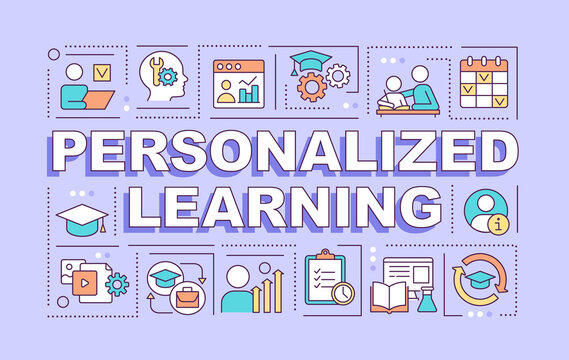
In the ever-evolving landscape of education, the concept of personalized learning stands as a beacon of innovation and progress, promising to revolutionize traditional educational practices. At its core, personalized learning represents a fundamental shift in the way we approach education, moving away from the one-size-fits-all model towards a more tailored and individualized approach that honors the unique needs, interests, and abilities of each learner.
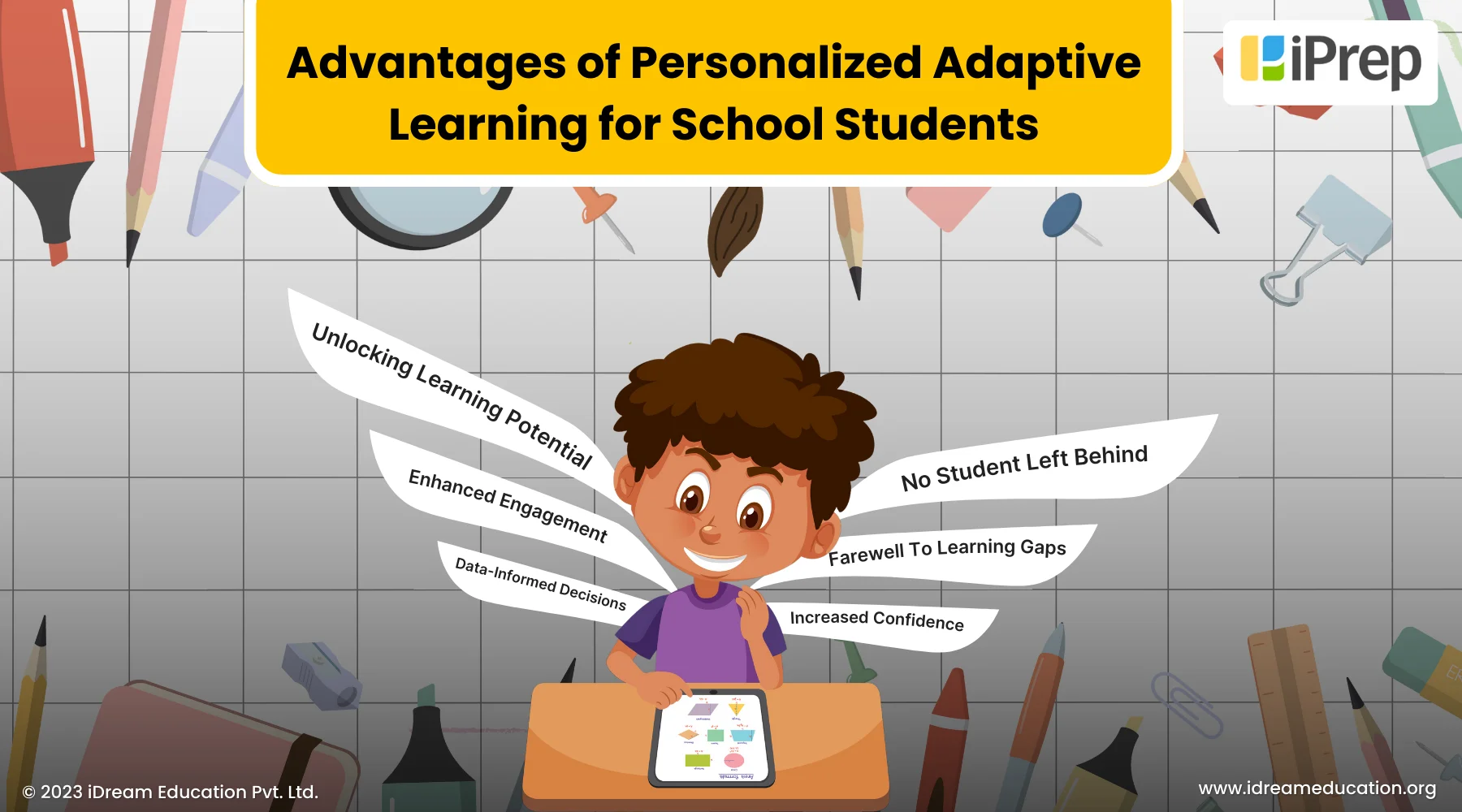
Understanding Personalized Learning:
Personalized learning is not merely a pedagogical strategy; it is a philosophy that places the learner at the center of the educational experience. At its essence, personalized learning seeks to recognize and embrace the diversity of learners, acknowledging that every student brings a distinct set of strengths, challenges, motivations, and learning styles to the classroom.
Tailoring Education to Individual Learners:
At its most basic level, personalized learning involves tailoring instruction, content, pacing, and assessment to meet the specific needs and preferences of each student. This means moving beyond the traditional one-size-fits-all curriculum and embracing flexible learning pathways that allow students to progress at their own pace, explore their interests, and pursue areas of passion and curiosity.
The Shift from Standardization to Customization:
For far too long, education has been characterized by a one-size-fits-all approach that fails to recognize the unique talents and potential of every student. Personalized learning represents a paradigm shift from standardization to customization, acknowledging that every learner is different and has the right to an educational experience that is tailored to their individual needs and aspirations.
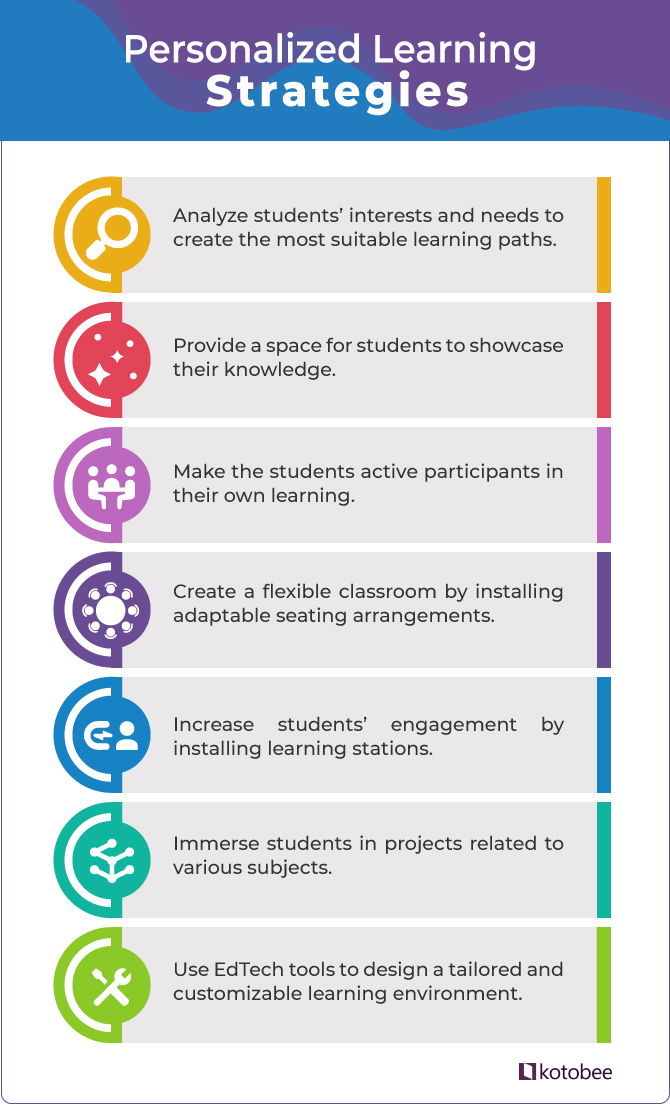
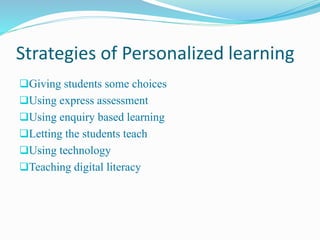
Key Principles of Personalized Learning:

Central to the concept of personalized learning are several key principles that guide its implementation:
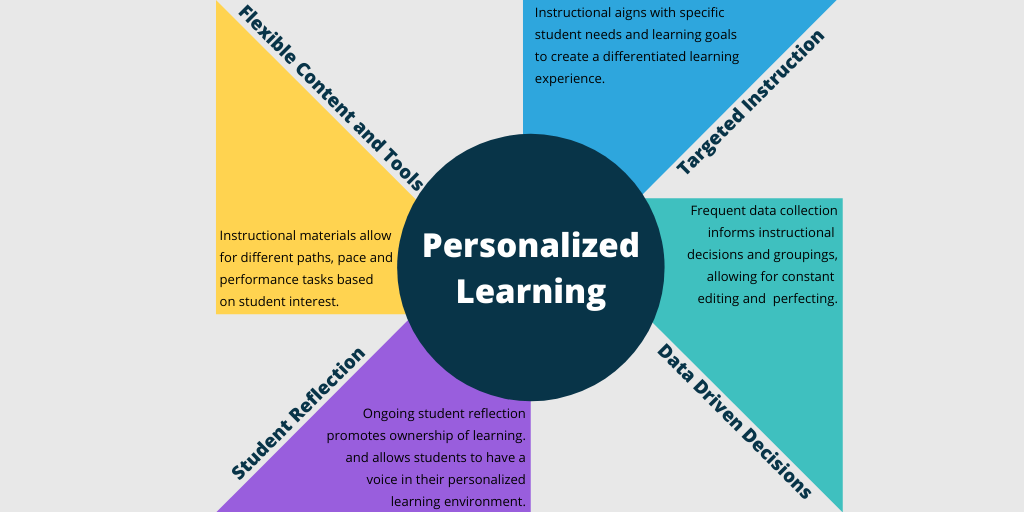
- Individualization: Providing each student with a learning experience that is tailored to their unique needs, interests, and abilities.
- Differentiation: Adapting instruction and learning activities to accommodate diverse learner needs and preferences.
- Flexibility: Offering students the freedom to choose how they learn, when they learn, and what they learn, empowering them to take ownership of their education.
- Student Agency: Empowering students to set goals, make decisions, and take responsibility for their own learning journey.
- Data-Informed Decision Making: Using data and assessment insights to guide instructional decisions, track student progress, and provide targeted support.
1. Individualization:
- Individualization in personalized learning involves recognizing that each student has unique learning needs, preferences, and abilities. It acknowledges that one-size-fits-all approaches to education may not effectively meet the diverse needs of all learners.
- Individualization allows educators to tailor instruction, learning activities, and assessments to address each student's specific strengths, challenges, interests, and learning styles.
- By individualizing instruction, educators can provide targeted support and differentiation, ensuring that all students have opportunities to succeed and thrive academically.
2. Differentiation:
- Differentiation is the process of adapting instruction and learning activities to accommodate diverse learner needs and preferences. It involves recognizing that students may require different levels of support, scaffolding, or enrichment to reach their learning goals.
- Differentiation strategies may include varying instructional methods, providing multiple means of representation, offering flexible learning pathways, and adjusting the pace and complexity of learning tasks.
- By differentiating instruction, educators can meet students where they are, address their individual learning needs, and foster a more inclusive and equitable learning environment.
3. Flexibility:
- Flexibility is a core principle of personalized learning that allows students to have greater control and autonomy over their learning experiences. It involves providing students with choices, options, and opportunities to customize their learning paths based on their interests, preferences, and goals.
- Flexible learning pathways enable students to explore topics at their own pace, pursue independent projects, and engage in authentic, real-world learning experiences. It empowers students to take ownership of their learning journey and develop self-directed learning skills.
- By offering flexibility in how, when, and where learning occurs, educators can accommodate students' diverse learning needs and preferences, promote intrinsic motivation, and enhance engagement and agency.
4. Student Agency:
- Student agency refers to students' ability to take an active role in their learning process, make choices, set goals, and take responsibility for their learning outcomes. It involves empowering students to become self-directed learners who are motivated, engaged, and invested in their education.
- Personalized learning environments prioritize student agency by providing opportunities for students to make decisions, express their voice and choice, and pursue their interests and passions.
- By fostering student agency, educators can cultivate a sense of ownership, autonomy, and empowerment among students, leading to deeper learning, increased motivation, and greater academic achievement.
5. Data-Informed Decision Making:
- Data-informed decision making involves using data and assessment insights to guide instructional decisions, track student progress, and provide targeted support. It relies on collecting, analyzing, and interpreting data from various sources to gain insights into student learning and inform instructional practices.
- Personalized learning environments leverage data to identify students' strengths, weaknesses, and learning needs, tailor instruction to meet individual student needs, and monitor student progress over time.
- By integrating data into the instructional process, educators can make evidence-based decisions, personalize instruction effectively, and optimize learning outcomes for all students.

The Role of Technology in Personalized Learning:
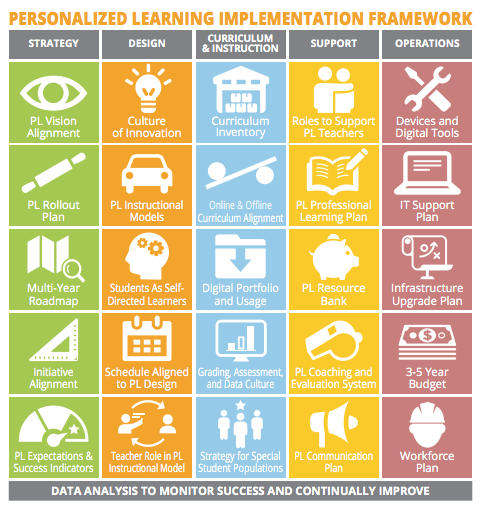
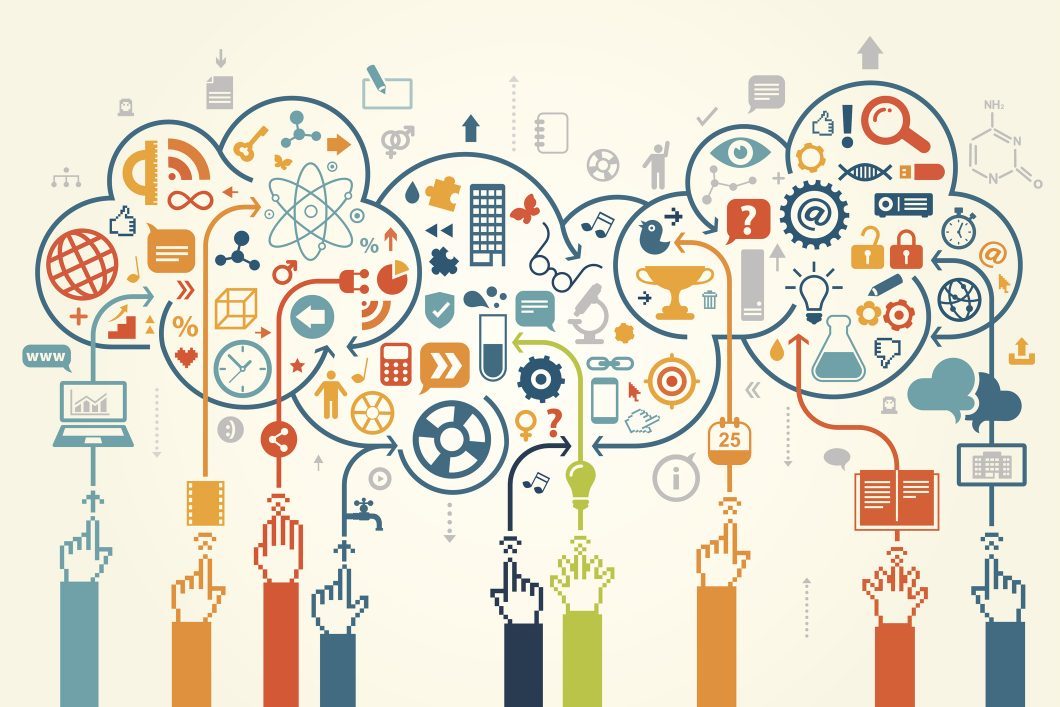
Technology plays a crucial role in enabling personalized learning by providing educators and learners with the tools, resources, and data they need to create customized learning experiences. From adaptive learning platforms and learning management systems to educational apps and learning analytics tools, technology has the power to personalize instruction, facilitate differentiation, and empower learners to achieve their full potential.
1. Adaptive Learning Platforms:
- Adaptive learning platforms leverage technology to deliver personalized instruction that adapts to each student's learning needs, pace, and preferences. These platforms use algorithms to analyze student performance data and dynamically adjust the content, difficulty level, and sequence of learning activities.
- By providing targeted interventions, adaptive learning platforms can address gaps in understanding, challenge students at their appropriate skill level, and scaffold learning to support mastery.
2. Learning Management Systems (LMS):
- Learning management systems (LMS) serve as central hubs for organizing, delivering, and managing educational resources, activities, and assessments. LMS platforms enable educators to personalize learning experiences by curating content, designing differentiated assignments, and tracking student progress.
- Through LMS platforms, educators can create individualized learning pathways, assign personalized tasks, and provide feedback and support to students based on their unique needs and performance.
3. Educational Apps and Software:
- Educational apps and software offer interactive, engaging, and personalized learning experiences across various subjects and grade levels. These apps use features such as adaptive quizzes, gamification elements, and multimedia content to cater to different learning styles and preferences.
- Whether it's math drills, language learning exercises, or interactive simulations, educational apps provide students with opportunities for self-paced learning, immediate feedback, and independent exploration.
4. Learning Analytics:
- Learning analytics involves the collection, analysis, and interpretation of student data to gain insights into learning behaviors, patterns, and outcomes. By harnessing the power of data, educators can make informed decisions, identify areas for improvement, and personalize instruction to meet individual student needs.
- Learning analytics tools track various metrics, such as engagement levels, completion rates, assessment scores, and progress over time, enabling educators to monitor student performance, intervene when necessary, and provide timely support.
5. Personalized Content and Resources:
- Technology enables the creation and delivery of personalized content and resources tailored to each student's interests, learning goals, and proficiency level. Whether it's interactive multimedia presentations, digital textbooks, or curated online resources, personalized content engages students and enhances their learning experience.
- With access to a wealth of digital resources, students can explore topics of interest, access supplementary materials, and engage in self-directed learning activities that cater to their individual needs and preferences.
6. Collaboration and Communication Tools:
- Technology facilitates collaboration and communication among students, educators, and parents, creating opportunities for personalized learning experiences both inside and outside the classroom. Collaboration tools such as Google Workspace, Microsoft Teams, and collaborative whiteboards enable students to work together on projects, share ideas, and provide peer feedback.
- Communication tools such as email, discussion forums, and messaging apps facilitate ongoing communication between students and educators, enabling personalized support, feedback, and guidance.
7. Accessibility and Inclusivity:
- Technology plays a critical role in promoting accessibility and inclusivity in personalized learning environments by providing accommodations and support for students with diverse learning needs. Accessibility features such as screen readers, text-to-speech tools, and closed captioning make digital content more accessible to students with disabilities.
- Inclusive design principles ensure that educational technology products and platforms are designed with diverse learners in mind, considering factors such as language, culture, socioeconomic background, and individual preferences.
8. Mastery-Based Learning:
- Mastery-based learning is a personalized learning approach that focuses on ensuring students achieve mastery of essential skills and concepts before progressing to more advanced content. Instead of advancing based on fixed time frames, students advance at their own pace, mastering each concept before moving on.
- Mastery-based learning allows students to work through learning materials at a pace that suits them, providing opportunities for remediation and enrichment as needed. This approach emphasizes depth of understanding and competency rather than simply completing assignments or reaching arbitrary deadlines.
9. Flexible Learning Pathways:
- Personalized learning embraces flexible learning pathways that allow students to choose from a variety of instructional materials, resources, and activities based on their interests, learning styles, and goals. Flexible learning pathways empower students to explore topics in depth, pursue independent projects, and engage in real-world applications.
- Whether through project-based learning, inquiry-based learning, or interdisciplinary studies, flexible learning pathways enable students to take ownership of their learning journey and pursue personalized learning experiences that align with their passions and aspirations.
10. Social and Emotional Learning (SEL):
- Personalized learning encompasses social and emotional learning (SEL), recognizing the importance of addressing students' social and emotional needs alongside academic learning. SEL skills such as self-awareness, self-management, social awareness, relationship skills, and responsible decision-making are essential for students' holistic development.
- Personalized learning environments provide opportunities for SEL through activities such as collaborative projects, peer feedback, mindfulness practices, and social-emotional check-ins. By fostering a supportive and inclusive learning community, personalized learning promotes students' well-being, resilience, and interpersonal skills.
11. Student-Centered Instruction:
- Personalized learning shifts the focus from teacher-centered instruction to student-centered instruction, where students take an active role in their learning process. Student-centered instruction emphasizes inquiry, exploration, and discovery, allowing students to construct their understanding through hands-on experiences and meaningful interactions.
- In student-centered classrooms, educators serve as facilitators, mentors, and guides, supporting students' inquiry, providing scaffolding when needed, and fostering a culture of collaboration and critical thinking. This approach promotes student autonomy, agency, and intrinsic motivation.
12. Formative Assessment and Feedback:
- Personalized learning relies on formative assessment practices to gather ongoing feedback on student progress, understanding, and learning needs. Formative assessments, such as quizzes, checkpoints, and informal observations, provide insights into students' strengths, weaknesses, and misconceptions in real-time.
- Timely and targeted feedback is an essential component of personalized learning, guiding students' learning process, addressing misconceptions, and promoting metacognitive skills. Feedback can come from educators, peers, self-assessment, or technology tools, helping students monitor their progress and make adjustments to their learning strategies.
13. Community and Parent Engagement:
- Personalized learning extends beyond the classroom to involve families, communities, and other stakeholders in students' educational journey. Community partnerships, family involvement, and parent engagement initiatives enhance the personalized learning experience by providing additional support, resources, and opportunities for students.
- Schools and districts may collaborate with community organizations, businesses, and local experts to provide authentic learning experiences, mentorship opportunities, and career exploration opportunities for students. Family engagement efforts foster a sense of partnership between schools and families, ensuring that personalized learning extends beyond the school walls and into students' homes and communities.
14. Culturally Responsive Teaching:
- Personalized learning embraces culturally responsive teaching practices that honor and celebrate students' cultural backgrounds, identities, and lived experiences. Culturally responsive teaching recognizes that students come from diverse cultural, linguistic, and socioeconomic backgrounds, and seeks to create inclusive and affirming learning environments.
- Educators incorporate culturally relevant materials, texts, and perspectives into their instruction, engage in culturally responsive pedagogies, and build authentic relationships with students and families. By valuing students' cultural assets and drawing on their cultural backgrounds as resources for learning, personalized learning becomes more relevant, meaningful, and empowering for all students.
CONCLUSION:
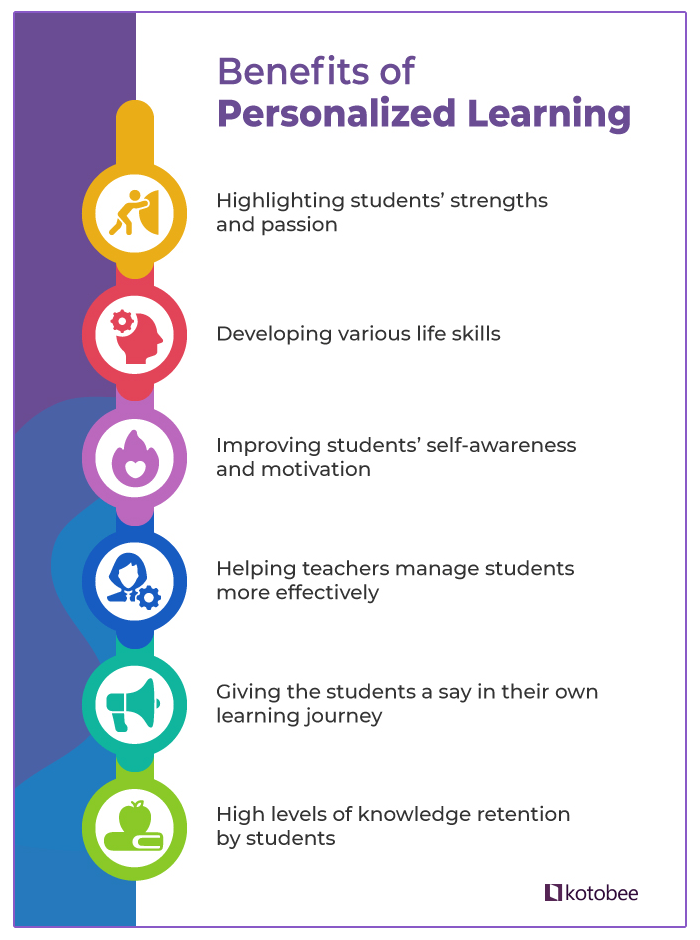
In conclusion, personalized learning represents a transformative approach to education that places students at the center of the learning experience, catering to their unique needs, interests, and abilities. By embracing key principles such as individualization, differentiation, flexibility, student agency, and data-informed decision making, personalized learning offers a pathway to create more inclusive, engaging, and effective learning environments.
Personalized learning recognizes that one-size-fits-all approaches to education may not effectively meet the diverse needs of all learners. Instead, it acknowledges the importance of tailoring instruction, learning activities, and assessments to address each student's specific strengths, challenges, and learning styles. Through individualization and differentiation, educators can provide targeted support, scaffold learning, and foster a deeper understanding of concepts.
Flexibility is a hallmark of personalized learning, allowing students to have greater control over their learning experiences. Flexible learning pathways empower students to explore topics at their own pace, pursue areas of interest, and engage in authentic, real-world learning experiences. By offering choices and opportunities for customization, educators can promote student agency, ownership, and intrinsic motivation.
Data-informed decision making plays a crucial role in personalized learning, enabling educators to monitor student progress, identify learning gaps, and adjust instruction accordingly. By leveraging data and assessment insights, educators can make evidence-based decisions, track student growth over time, and provide targeted interventions to support student success.
In essence, personalized learning embodies the belief that every student has the potential to succeed and thrive academically when provided with the necessary support, resources, and opportunities. By embracing personalized learning principles and practices, educators can create learning environments that honor the uniqueness of each learner, foster a love for learning, and prepare students for success in an ever-changing world.

Comments
Post a Comment